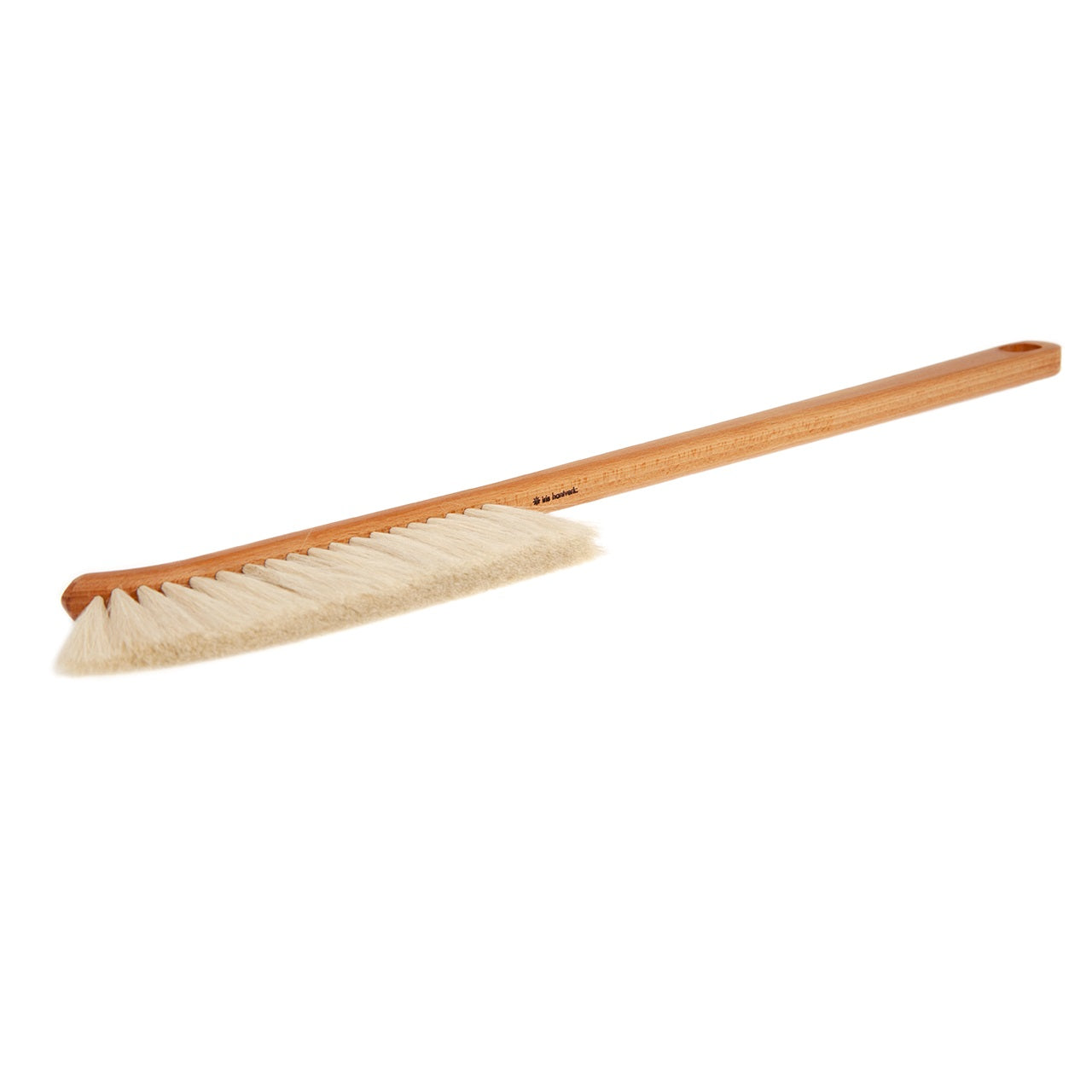
Iris Hantverk is a brand of tradition, built around the Swedish traditions of the late 19th century. In the late 1900s century a small brush manufacturing started out in Stockholm. It was a successful movement so successful that it remains today. Now, as then, every brush is made by hand by visually impaired craftsmen. It brings new dimensions to the concept of sensitively made by hand.
All brushes are of exclusive design and made mostly from natural materials. The core of the business is the brush binding manufacturing at Sandsborgsvägen, Enskede – here 5 visually impaired craftsmen from different cultures make brushes according to an old Swedish tradition.
Iris Hantverk has strong ties to and share their history with the Visually impaired organization in Sweden, SRF. In November 1870, Dr. Axel Beskov took the initiative of founding the Manilla School - a workhouse for visually impaired craftsmen in Stockholm. Initially there were nine people, most of them lived at the workhouse. A large part of DBF work came to revolve around the development of support for the artisans and their ability to live off their work. In 1902 DBF, "De blindas förening", a political independent group founded by the
craftsmen, decided that materials for brush binding and basket making would be purchased collectively in order to reduce prices and be sold to the visually impaired craftsmen for purchase price. In 1906, a property was purchased becoming an office and library, brush binding factory, warehouse for raw materials, sales of raw material and a shop – the beginnings of what Iris Hantverk is today.